Thesis Project
The relationship between science and art is often undermined or dismissed as a mere momentary collaboration, in which one field borrows from the other in a slow but natural exchange of insights and discoveries. Nevertheless, by actively studying the relation between these, we can gain valuable insight into the ways one can support the other for the further development of both.
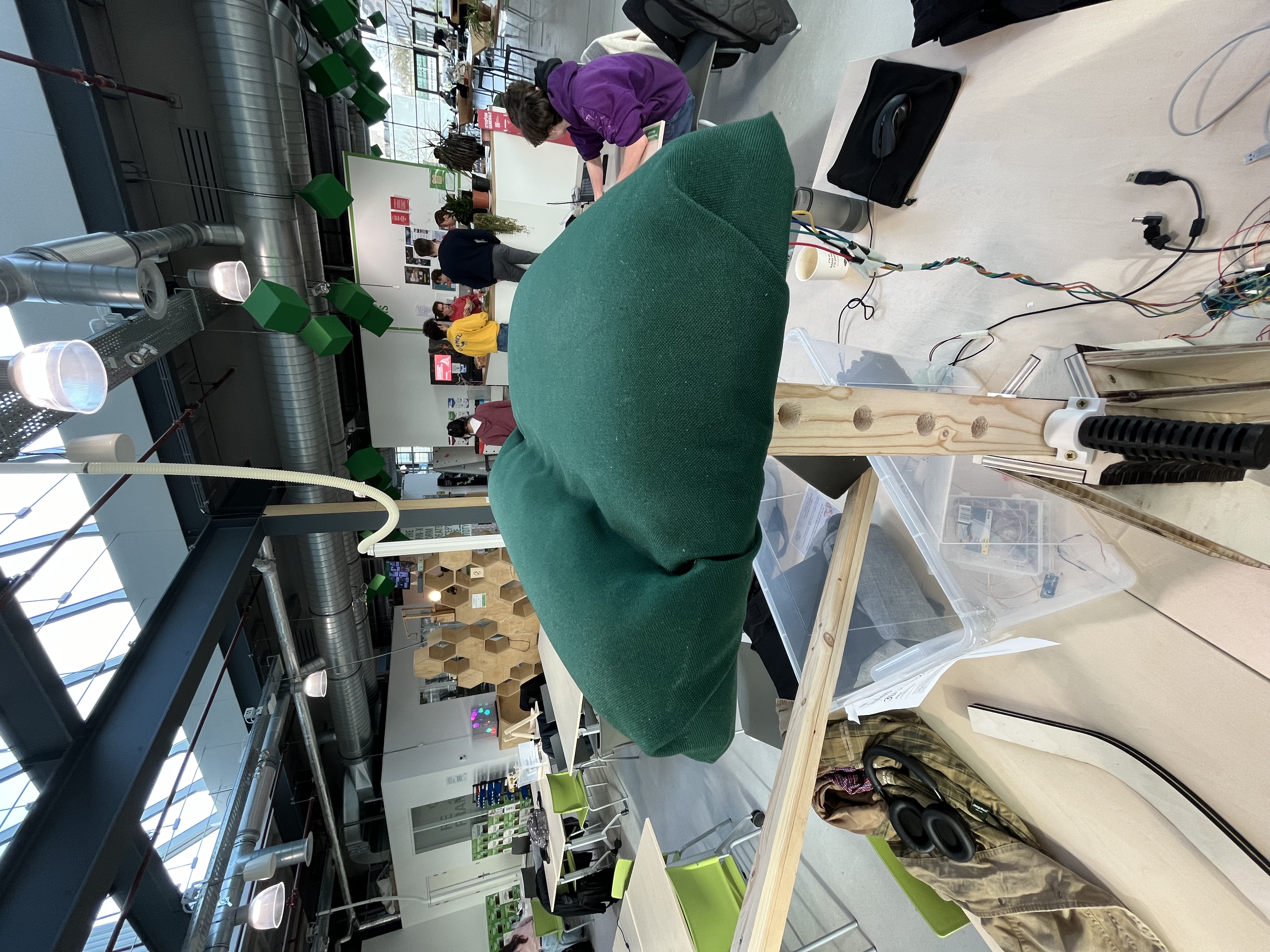
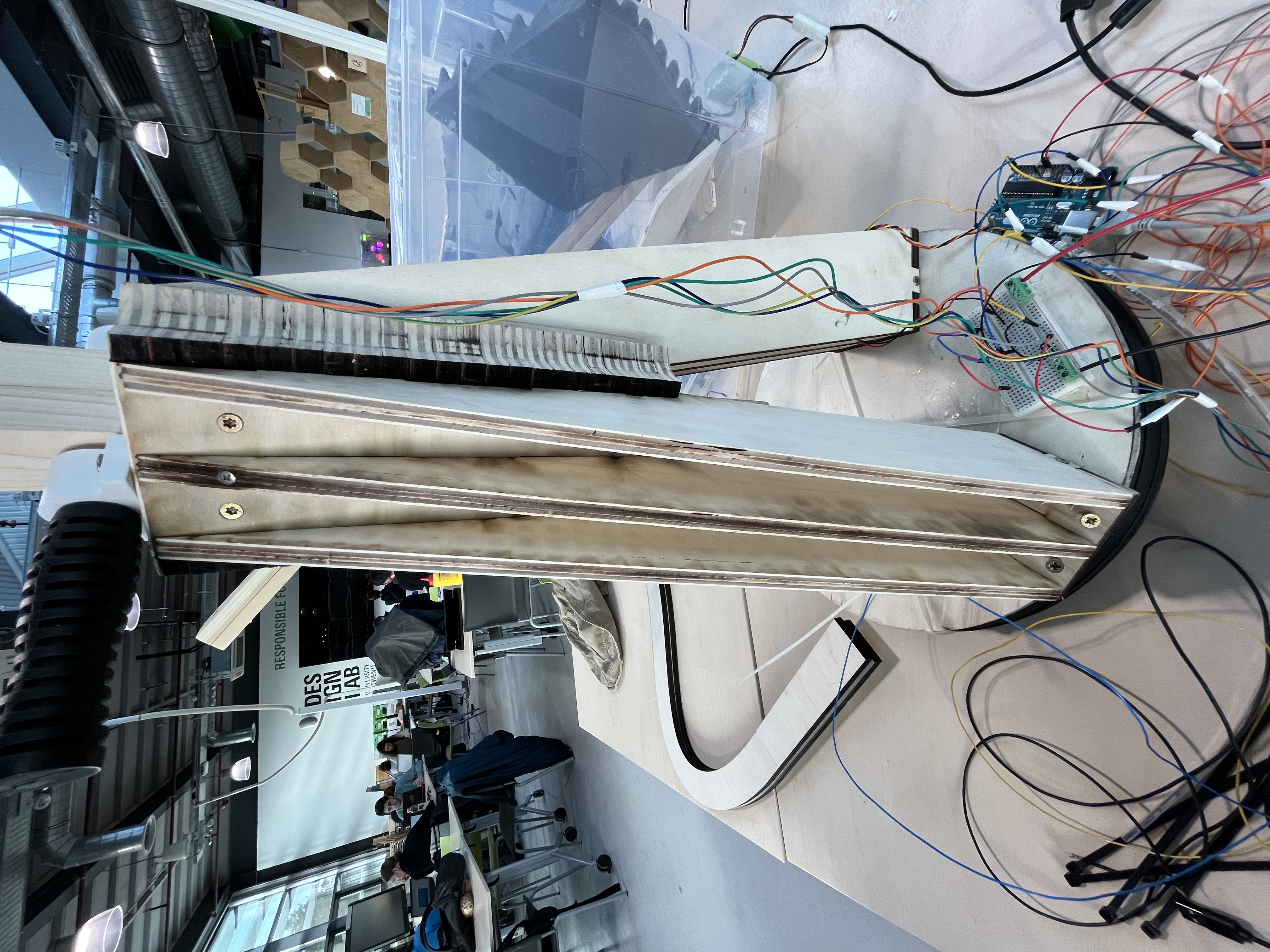
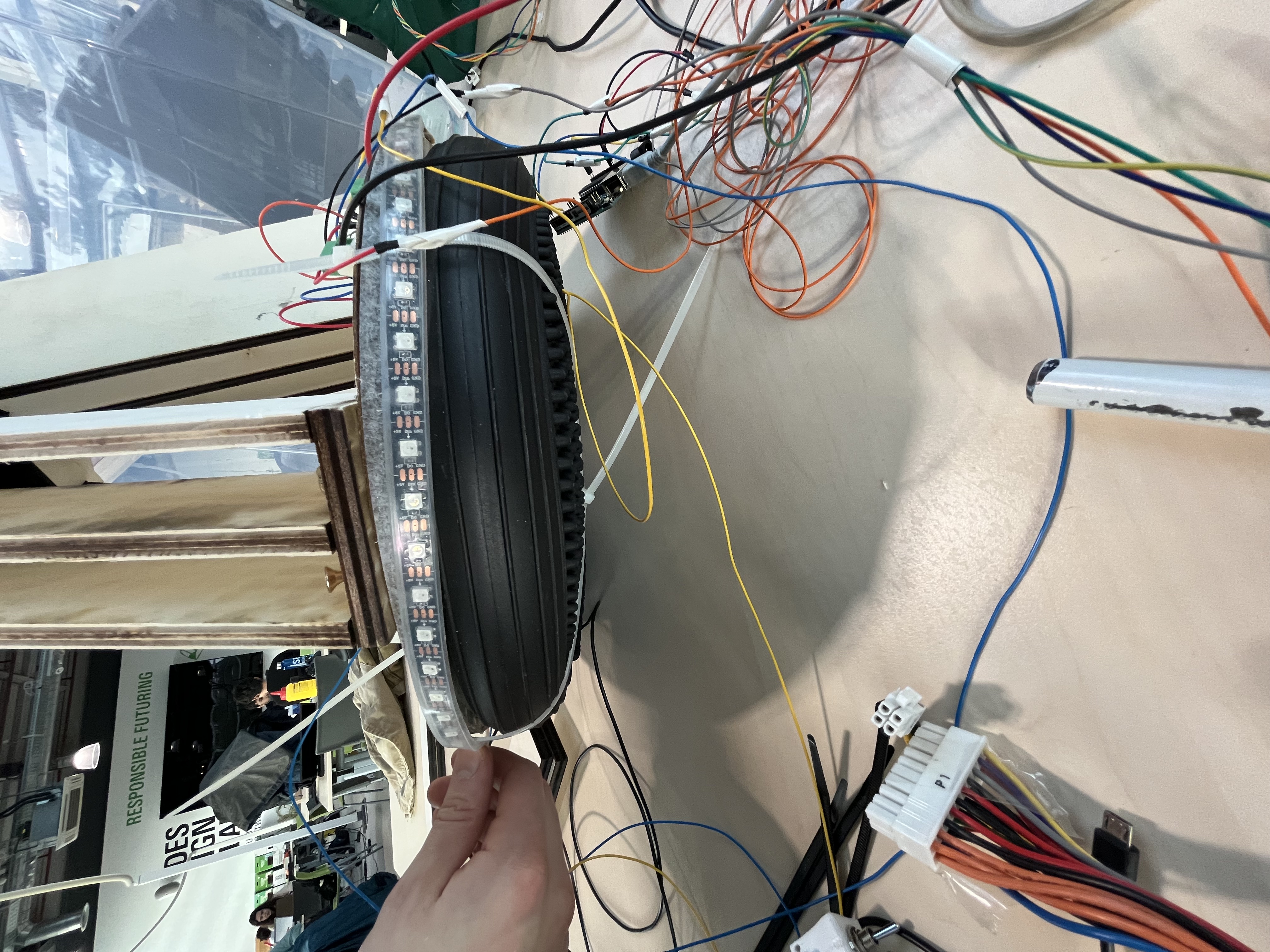
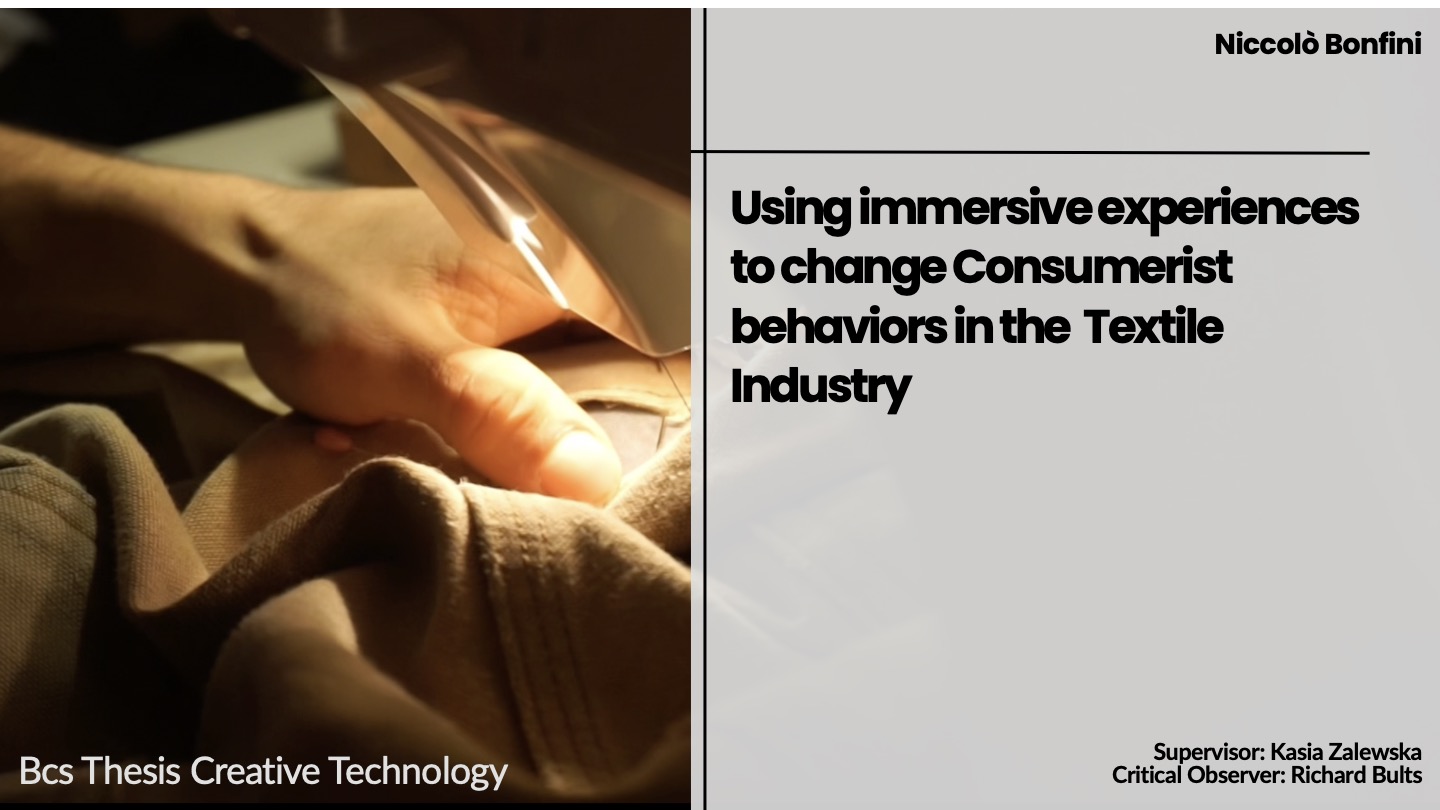
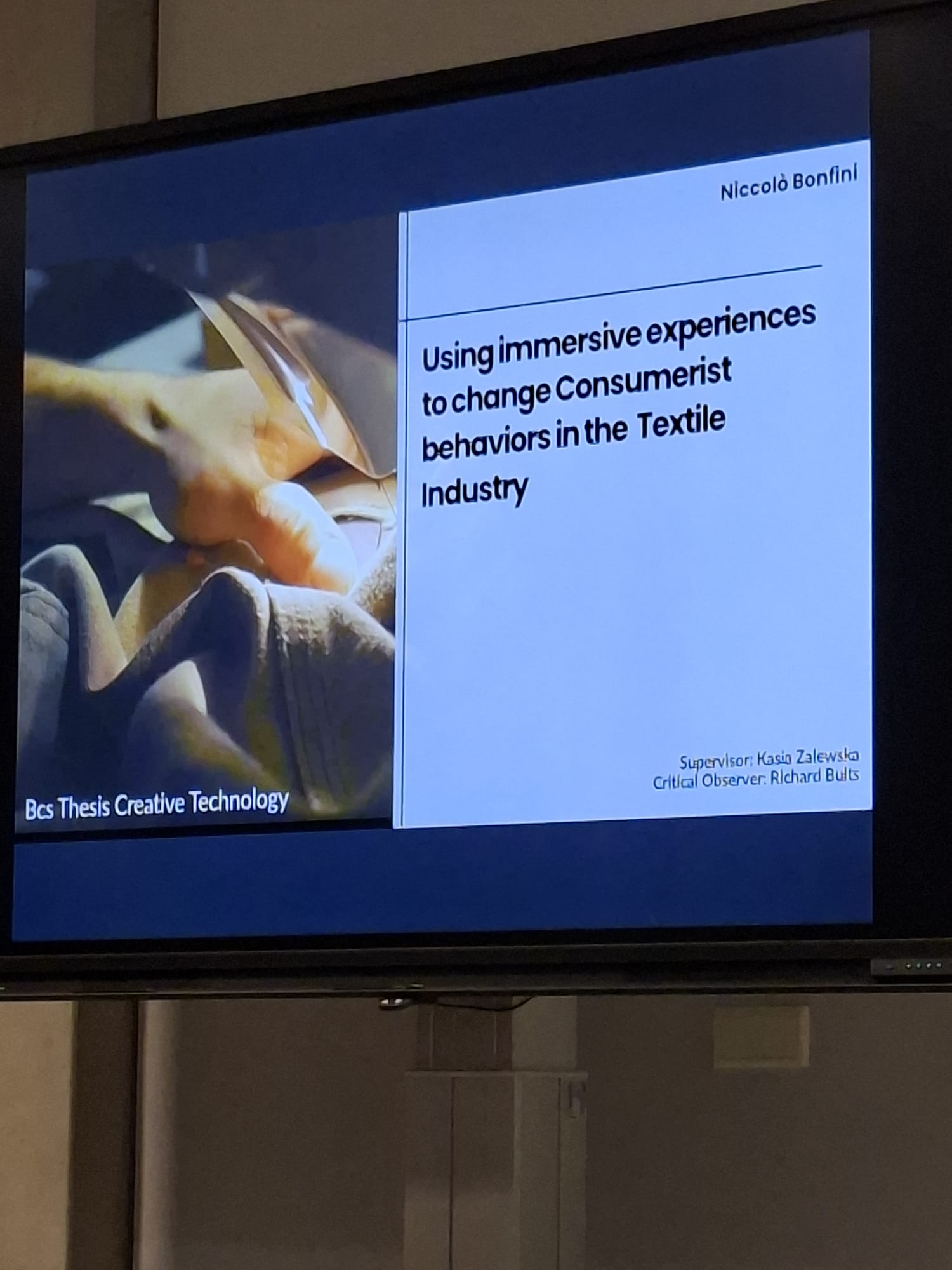
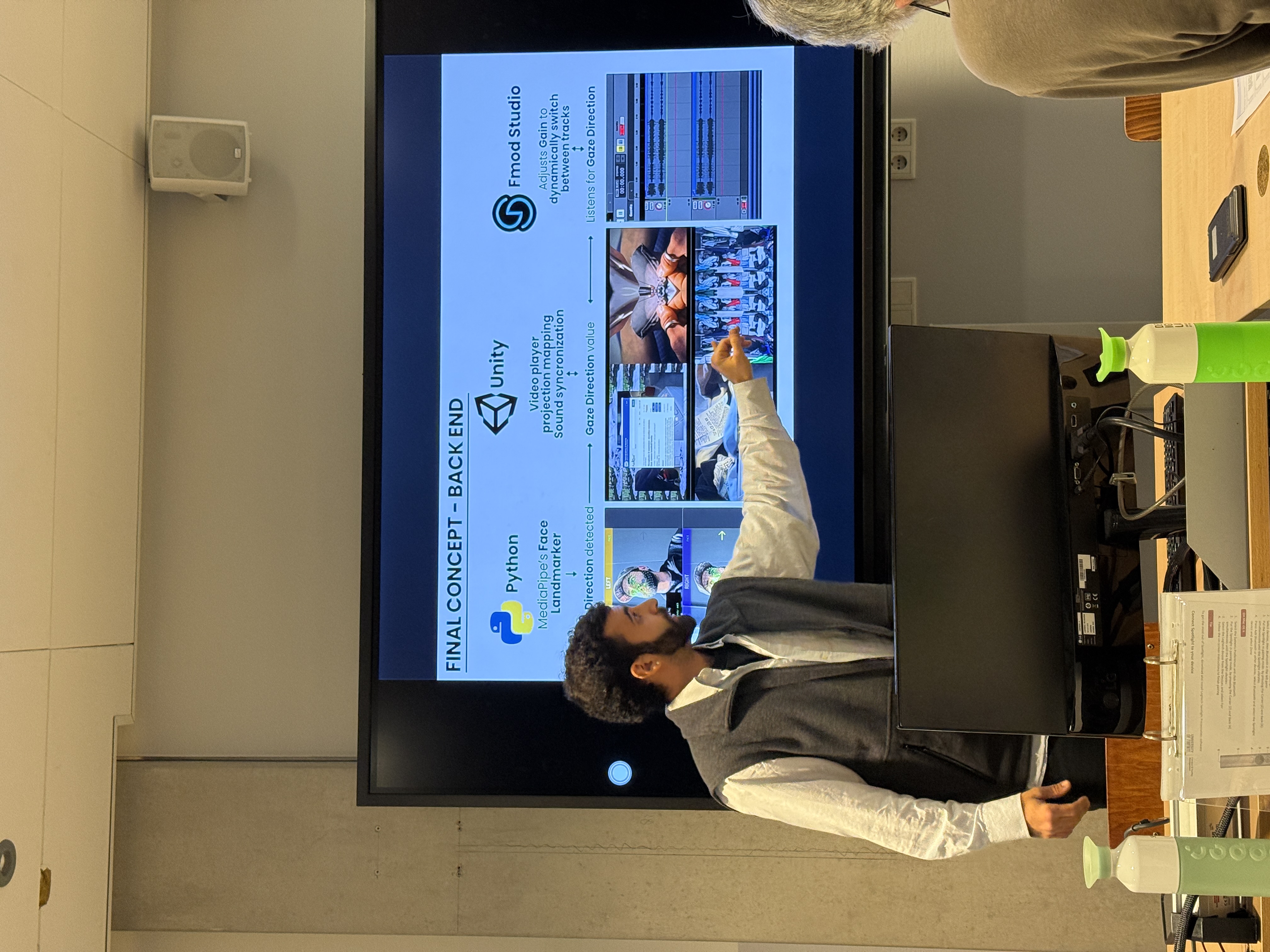
This thesis explores how immersive experience design can be used as an intervention to increase awareness of textile overconsumption and support early stages of behavioural change in 18 to 25 year old consumers. Grounded in literature on textile pollution across the lifecycle of garments, consumerist drivers, and behavioural change theory, the project follows the Design for Creative Technology methodology to develop a realised artefact: a linear, emotionally structured immersive audiovisual installation. The experience uses scripted emotional journeys, presented through projection-based visuals and interactive sound, to translate information about the lifecycle of textiles into a tangible, relatable experience.
The installation was evaluated through pre- and post-experience semi-structured interviews with participants. A structured coding approach was used to compare shifts in awareness, perceived personal relevance, and behavioural intentions. Findings indicate a consistent reduction in psychological distance and expressed a strong willingness to adopt sustainable consumption behaviours.
Read Full Thesis Paper (PDF) ↗